

Banking Courses in 2026: Skills and Career Options for Aspiring Banking Professionals
 Hardik Gupta22 Sept, 2026
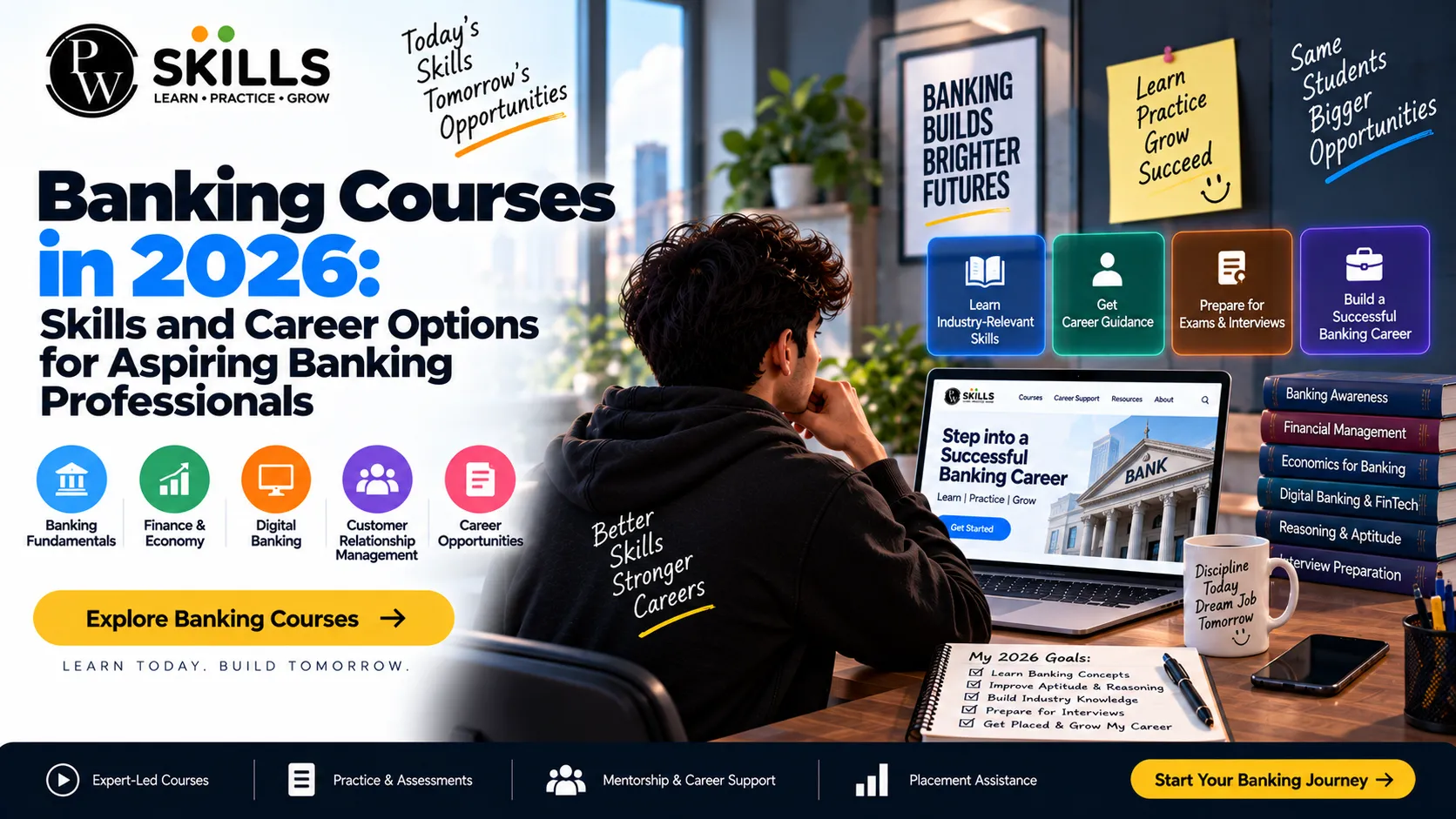
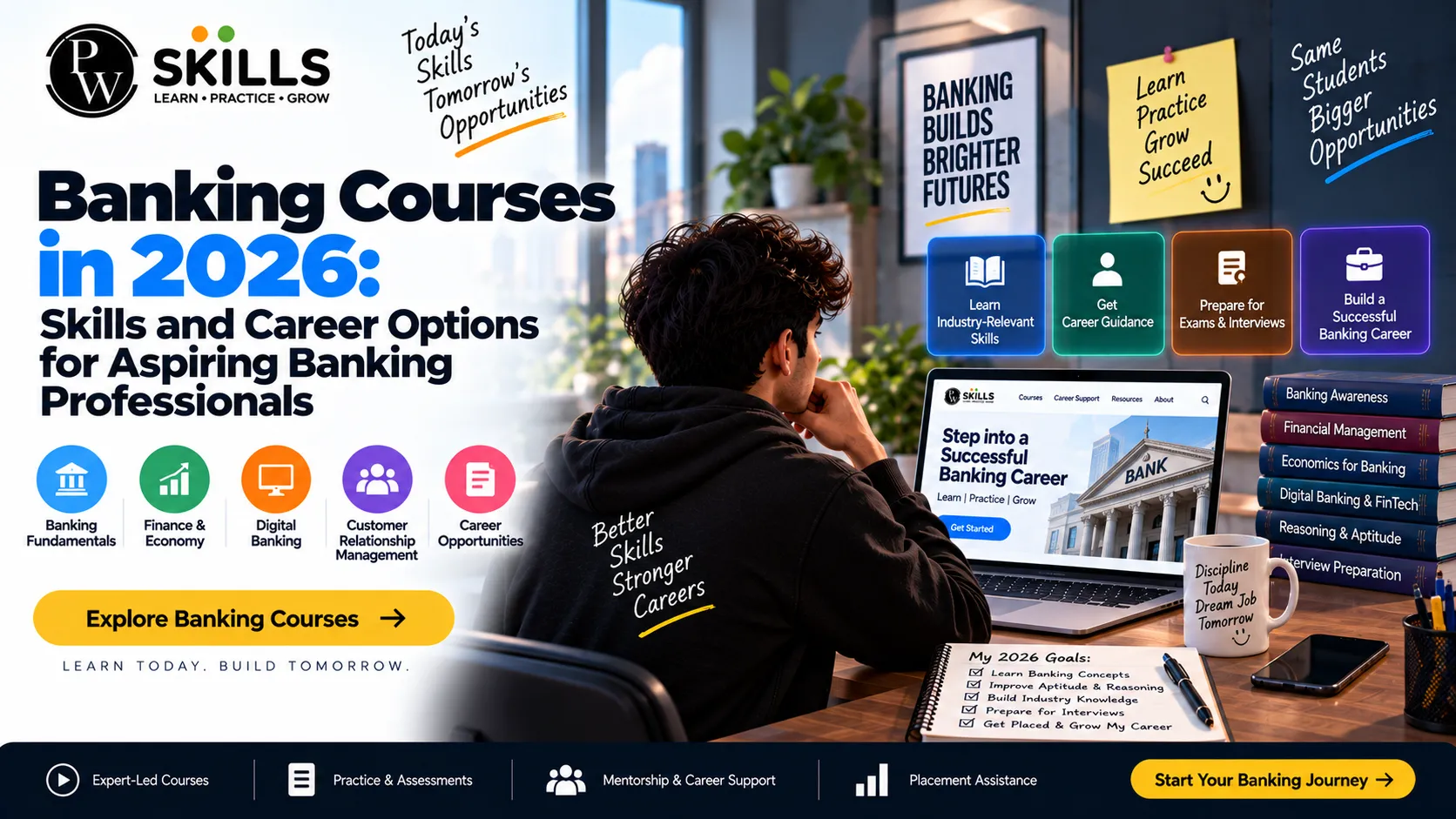
Graduating college often leaves students facing a tough job market where generic degrees fail to match employer requirements. Navigating the modern Banking, Financial Services, and Insurance (BFSI) industry requires far more than basic financial literacy.
Candidates often struggle to stand out among thousands of applicants due to a lack of practical exposure and specialized workplace communication skills. Selecting targeted banking courses helps bridge this gap by transforming academic theory into actionable skills.
With digital payments, mobile banking, and fintech solutions expanding rapidly, structured training programs offer a reliable pathway to launch a successful career.
Overview of Banking Courses
The financial sector depends heavily on structured training to prepare graduates for complex operational and customer-facing roles. Enrolling in professional banking courses provides students with structured insight into how modern financial institutions function, cover regulatory compliance, and handle customer relations.
The Banking, Financial Services, and Insurance (BFSI) sector continues to experience rapid growth, driven by digital transformation, financial inclusion initiatives, and expanding banking infrastructure. This growth has created a wide range of career opportunities for fresh graduates and working professionals looking to build or transition into the financial domain. With increasing adoption of digital payments, mobile banking, and fintech solutions, the BFSI sector is becoming one of the strongest employment generators. From customer-facing roles to analytical and advisory positions, the industry offers diverse career paths suited to different skill sets.
Purpose and Learning Formats
-
Dual-Track Learning: Modern BFSI courses combine core financial principles with professional workplace etiquette.
-
Flexible Durations: Learning tracks range from short 2-month certification programs to extensive year-long specialized tracks offering up to 125+ training hours.
-
Practical Orientation: Programs incorporate practical case studies, peer practice, role plays, and mock interviews to build workplace readiness.
Also Explore : BFSI Course
To accommodate different schedules, budgets, and career stages, training platforms offer structured tiers:
-
Basic Plan (Self-Paced): Includes recorded lectures, 25 training hours, core banking and soft skills across 5 modules, and 5 practical case studies.
-
Premium Plan: Features 112+ training hours, live interactive sessions, peer practice, confidence-building exercises, and real-time mentor interaction.
-
Pro Plan: Offers 125+ training hours with integrated mock interviews and specialized HR preparation.
Skills You Can Build Through Banking Courses in 2026
To succeed in today's financial environment, entry-level professionals need a blend of analytical competencies and interpersonal strengths. High-quality training programs systematically build essential banking skills through specialized training modules. As the industry evolves, the demand for professionals with both domain knowledge and strong communication skills is increasing significantly.
Core Technical Competencies
-
Regulatory Understanding: Fundamentals of BFSI, regulatory frameworks, non-banking financial companies (NBFCs), and overall banking structure.
-
Financial Products: In-depth knowledge of deposit products, lending solutions, insurance, risk management, forex, and mutual funds.
-
Digital Infrastructure: Understanding payment systems, Unified Payments Interface (UPI), digital banking, and cybersecurity measures.
-
Operational Execution: Master internal banking operations, customer service workflows, and BFSI-specific sales techniques.
Workplace Soft Skills
-
Professional Communication: Developing advanced communication, public speaking skills, and business email etiquette.
-
Career Branding: Optimizing LinkedIn profiles, navigating HR connection challenges, and personal branding tailored for BFSI.
-
Personal Development: Cultivating emotional intelligence, critical thinking, decision making, and confidence for workplace interactions.
Which Banking Courses Match Different Career Goals
Selecting the right program depends on career aspirations, current educational background, and long-term career focus.
|
Target Profile |
Recommended Focus |
Key Learning Outcomes |
|
Fresh Graduates |
Banking course for freshers |
Foundations of BFSI, customer service basics, workplace communication, and interview preparation. |
|
Degree Holders |
Banking courses after graduation |
Specialized modules in deposit/lending products, financial analysis, and sales techniques. |
|
Career Switchers |
Comprehensive dual-track certification |
Fast-track practical training, capstone projects, and profile-building modules. |
Tailoring your educational path ensures that you do not waste time on overly theoretical material when your primary target is landing a job quickly. A targeted banking course for freshers emphasizes interview readiness and core operational concepts.
Conversely, candidates exploring banking courses after graduation often seek advanced modules in wealth management, risk mitigation, and corporate lending to secure specialized advisor positions.
Subjects and Training Covered in Banking Courses
A standard industry curriculum offers detailed instruction split across 15 Core Banking modules and 10–12 Soft Skills modules, ensuring a logical progression from basic concepts to real-world application.
Technical Curriculum Highlights
-
Introduction to BFSI & Regulators: Understanding monetary authorities, financial policies, and governance guidelines.
-
NBFC & Banking Structure: Exploring private, public, regional rural, and non-banking financial frameworks.
-
Deposit & Lending Products: Analyzing retail credit, home loans, vehicle financing, current/savings accounts, and fixed deposits.
-
Banking Operations & Customer Service: Learning back-office operations, dispute resolution, client onboarding, and Know Your Customer (KYC) processes.
-
Digital Banking & Cybersecurity: Protecting banking networks, evaluating modern payment processing, and safeguarding client data.
-
Payment Systems & UPI: Hands-on study of instant payment settlements, digital wallets, and clearing systems.
-
Financial Markets: Comprehensive exposure to foreign exchange (forex), mutual funds, equities, and portfolio diversification.
-
Insurance & Risk Management: Evaluating life and general insurance mechanisms, risk underwriting, and claims management.
-
Sales in BFSI: Acquiring relationship-building techniques, ethical cross-selling, and client acquisition methods.
Soft Skills Curriculum Highlights
-
Advanced Communication & Public Speaking: Overcoming anxiety and delivering clear, persuasive customer presentations.
-
Business & Workplace Etiquette: Understanding formal corporate conduct, meeting protocols, and cross-departmental coordination.
-
Confidence Building & Personal Branding: Creating strong personal pitches and projecting credibility in corporate setups.
-
Emotional Intelligence & Critical Thinking: Handling high-pressure customer complaints calmly and applying structured decision-making.
-
BFSI LinkedIn Profile Building: Structuring professional profiles to attract recruiters and industry connections.
-
Mock Interviews & HR Preparation: Practicing real-world interview challenges to refine responses before actual job assessments.
How Banking Courses Prepare You for Banking Jobs
Theoretical knowledge alone rarely guarantees workplace success. Professional certification programs employ practical learning models that directly bridge the gap between classroom concepts and job requirements.
1. Case Studies and Capstone Projects
Students engage in real-world BFSI scenarios involving financial analysis and customer handling. Working through practical case studies allows candidates to evaluate client profiles, assess creditworthiness, and make informed financial decisions in simulated environments.
2. Live Interactive Learning
Top-tier course variants incorporate live interactive modules including peer practice sessions, confidence-building exercises, real-time mentor interaction, and role plays mimicking branch operations. This active participation builds practical confidence far faster than passive reading.
3. Clear Certification Criteria
To earn recognized credentials, students must meet strict academic standards:
-
Minimum 60% attendance across scheduled training hours.
-
Minimum 60% score in formal course assessments.
Completing these requirements awards learners valuable certifications, such as joint credentials recognized by national bodies like NSDC, proving job readiness to prospective employers.
Career Options After Completing Banking Courses
Completing a structured learning track opens doors to diverse positions across retail banks, NBFCs, insurance firms, and financial institutions. Building a long-term banking career starts with entry-level positions that provide clear paths for growth.
Employment outlook across the BFSI domain shows consistent expansion across multiple entry-level and advisory job roles:
-
Relationship Manager: Serves as the primary point of contact for retail or corporate clients, offering tailored financial products, managing account portfolios, and building long-term business relationships.
-
Bank Officer: Oversees daily branch operations, handles cash workflows, processes account verification, and assists clients with routine transactions.
-
BFSI Sales Executive: Drives organizational growth by pitching loans, credit cards, insurance packages, and investment solutions to prospective clients.
-
Customer Service Associate: Manages customer interactions, handles branch or digital inquiries, resolves account disputes, and guides users through digital banking applications.
Tips to Choose the Right Banking Courses
Selecting the ideal training program requires evaluating several factors:
-
Evaluate the Curriculum Balance: Ensure the program offers a dual-track curriculum combining core banking subjects with BFSI-specific soft skills.
-
Check for Practical Exposure: Look for programs featuring real-world case studies, capstone projects, peer practice sessions, and live role plays.
-
Review Certification Standards: Verify whether the program offers recognized certificates, such as NSDC alignment, to enhance your resume's industry credibility.
-
Select the Appropriate Plan: Choose between self-paced recorded plans or live interactive variants based on whether you need direct mentorship and interview practice.
-
Confirm Career Support: Look for curriculum structures that actively integrate mock interviews, LinkedIn profile optimization, and HR outreach training.
Common Mistakes to Avoid When Selecting Banking Courses
Choosing the right banking course can make a difference to your learning experience and career preparation. Avoiding common mistakes can help you select a course that matches your goals, skills, and career plans.
-
Ignoring Soft Skills Training: Many students focus purely on memorizing banking terms while neglecting workplace etiquette, communication, and interview skills. Employers seek well-rounded candidates who can articulate ideas clearly.
-
Choosing Passive Learning Options: Relying solely on video lectures without interactive role-playing or practical case studies leaves you unprepared for real branch operations.
-
Disregarding Assessment Standards: Enrolling in courses without rigorous evaluation criteria can lead to low employer recognition. Programs requiring minimum attendance and test scores hold higher market value.
-
Overlooking Digital Banking Focus: Choosing outdated curricula that ignore UPI, payment gateways, cybersecurity, and digital banking platforms limits your relevance in modern financial settings.



FAQ
1. Who can enroll in banking courses?
2. How long do standard banking courses take to complete?
3. Do these programs offer soft skills training alongside technical subjects?
4. What career roles become accessible after completing a course?
5. Are practical projects included in the curriculum?





Get Free Counselling Today
and Clear up all your Doubts
 Live & recorded classes available at easeDashboard for progress trackingLakhs of practice questions


