

Chatbot and Conversational Marketing Guide
 Nivedita Dar5 May, 2026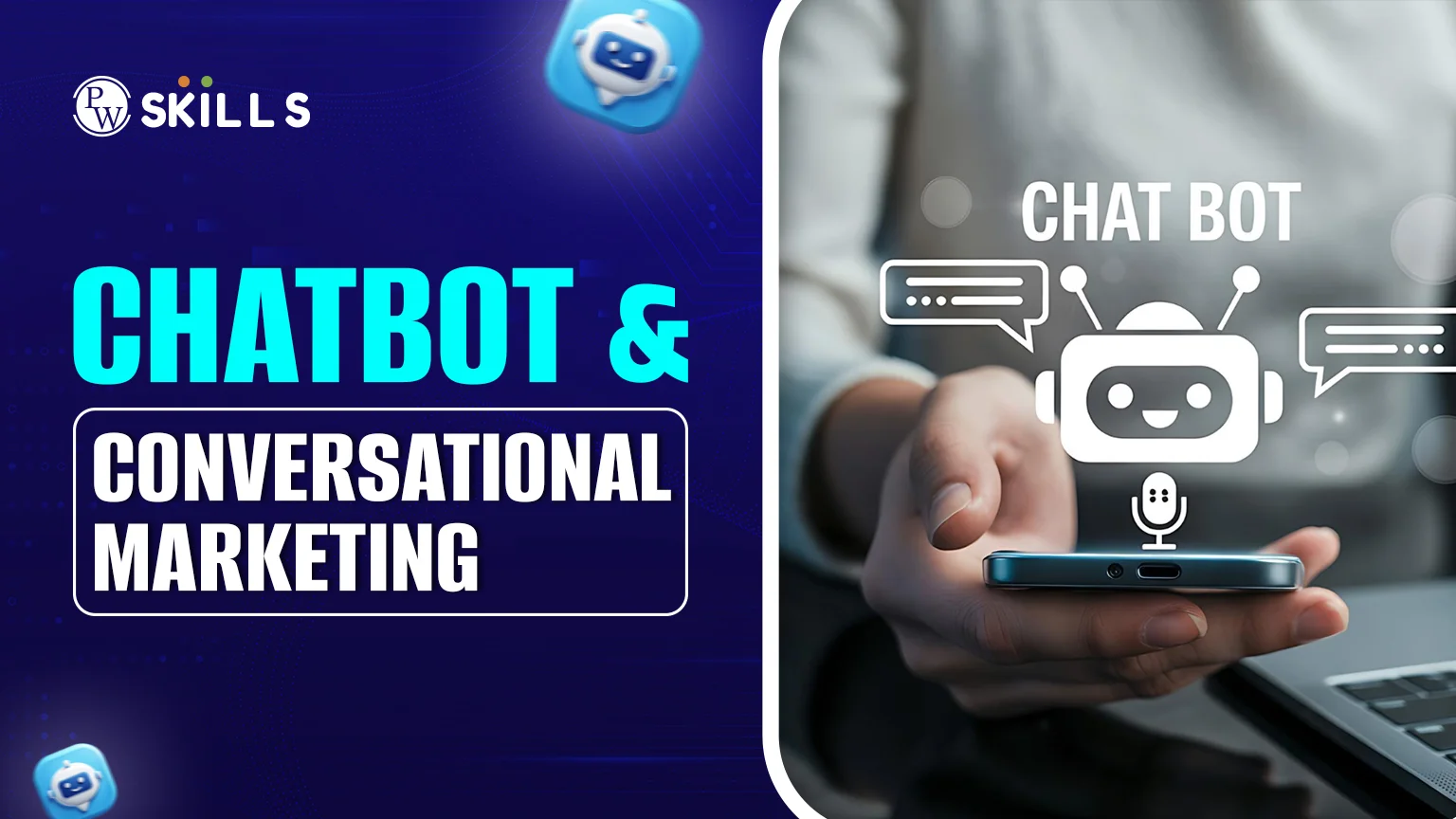
Most companies miss opportunities to convert customers because their slow sales process relies on generic lead forms and takes days to follow up. Enter chatbot & conversational marketing. If you're a student interested in digital marketing or an entrepreneur looking to grow your business, you need to know how chatbots can engage in real-time conversations.
This article will explain how to leverage automation to build trust, accelerate the sales cycle and provide a frictionless purchasing experience that's as human-like as possible.
What are Chatbot and Conversational Marketing?
Chatbot & conversational marketing is a feedback-driven, engagement and revenue-focused approach to marketing. In conventional marketing, a brand will send an email or put up a banner, and the consumer will react. Conversational marketing makes it a conversation. Chatbots allow brands to simultaneously engage in thousands of conversations. They're designed to interpret what the customer needs, respond to frequently asked questions and help them make a purchase. It's not about using a new technology but about understanding the users' needs and reaching them where they are.Importance Of Chatbot & Conversational Marketing for Brands
Chatbot & conversational marketing is based on a shift in customer behaviour. Consumers want "instant". They will abandon a website if it's too complicated or the contact form is too lengthy.- Real-time Engagement: No longer do you need to wait for customers to call during office hours.
- Scalability: One chatbot can manage the volume of traffic a human can't.
- Data Collection: Chatbots collect information on what customers need when they ask questions.
- Shortened Sales Cycle: Qualifying leads through a chat platform allows you to go from cold to hot in a matter of minutes.
Chatbot and Conversational Marketing Strategy
Creating a chatbot and conversational marketing strategy is more than a plug-and-play solution. It's based on a three-pronged approach of Engage, Understand, and Recommend.1. Engaging the Visitor
Rather than a pop-up, use a chat bubble. Ask questions related to the page they are on. If they are viewing a pricing page, the bot could ask, "Are you looking for the best plan for your team?"2. Understanding Needs
The bot should ask qualifying questions. Rather than a long questionnaire, it asks a series of questions. It's conversation-like. It allows the system to determine if the user is a high-intent buyer or information seeker.3. Recommending the Next Step
The bot responds to their answers. It could recommend a certain product, send over a relevant blog post, or even schedule an appointment on a sales team member's calendar.Chatbot and Conversational Marketing Examples
Chatbot and conversational marketing examples demonstrate the variety of ways different industries can use chatbots.- E-commerce Personal Shoppers: Fashion brands often use bots to ask about the user's style and then suggest which outfit to wear. This approach is like having a personal shopper.
- SaaS Lead Qualification: Tech firms use bots to ask whether the business is large or small and what their budget is. If it's a "hot lead", the bot will transfer it to a human agent.
- Travel and Hospitality: Airlines use chatbots to help customers rebook a flight, check their flight status or purchase a second piece of luggage without having to call a call centre.
- Banking and Finance: Financial institutions use chatbots to allow customers to easily check their account balance, report a lost or stolen credit card, or get an instant quote for a loan.
Chatbot and Conversational Marketing Benefits
This technology has several chatbot and conversational marketing benefits with a significant impact on the bottom line.- Higher Conversion Rates: A streamlined purchasing process results in more sales.
- Lower Operational Costs: Freeing up human time for tasks requiring human intelligence allows you to do more with fewer resources.
- Improved Customer Loyalty: When you provide customers with instant, helpful support, they will come back.
- 24/7 Availability: Even when you aren't, your marketing and sales are.
Chatbot and Conversational Marketing Uses
To get a taste of the possibilities, here are a few chatbot and conversational marketing use cases:Customer Support and FAQs
Chatbots can answer 80% of frequently asked questions. The request could be to check an order, to reset a password, or to explain a return policy. This means that the customer isn't forced to wait in a line.Product Discovery
When it comes to businesses with extensive inventories, a bot is a sieve. It narrows down the search by asking about prices, sizes, or features, alleviating the "paradox of choice".Event Registration
Rather than a landing page and form, a bot can register users for a webinar or workshop via a chat interface, which has higher conversion rates.Chatbot and Conversational Marketing Tools
Picking the right chatbot and conversational marketing tools depends on what the business wants to fix first. Some brands need help with answering repeated questions, some want to collect leads faster, while others want to make the buying journey feel less like filling a form and more like getting quick guidance.- Website chat tools: These sit on a website and help visitors find answers, explore pages, share basic details, or ask for help without waiting for a callback.
- Sales chat tools: These are useful when a business wants to understand whether a visitor is ready to buy, only comparing options, or simply looking for information.
- Customer support tools: These help with everyday questions around orders, bookings, returns, account updates, product details, or simple troubleshooting.
- No-code chatbot builders: These let teams create chat flows, question paths, and automated replies without depending on developers for every small change.
- Messaging automation tools: These help brands manage conversations across different digital channels so customers get a steady and connected experience.
Chatbot and Conversational Marketing Automation
The power of this movement lies in chatbot and conversational marketing automation. Automation doesn't mean "impersonal". It means using logic to ensure the right information reaches the right person. Advanced automation can integrate with your CRM (Customer Relationship Management) system. When a returning customer visits your site, the bot can greet them by name and ask if they are enjoying their recent purchase. This level of automation creates a "human" feel that builds strong brand affinity.Future Chatbot and Conversational Marketing Trends
The landscape is changing fast. Chatbot and conversational marketing trends ensure your strategy is up to date.- AI and Natural Language Processing (NLP): Bots are no longer relying just on buttons. They are able to comprehend and interpret human language.
- Voice-Activated Bots: Conversational marketing is going beyond the screen into voice search and voice shopping with the advent of smart speakers.
- Omnichannel Consistency: Companies are striving for a consistent experience across channels, so a chat started on Instagram can be picked up on the site or WhatsApp messaging app.
- Hyperpersonalisation: Leveraging AI to anticipate a user's needs based on their past behaviours and search and purchase patterns.
Also Check:
- Digital Marketing with AI Course
- Digital Marketing With AI
- Digital Marketing with AI + Social Media Marketing
- Digital Marketing with AI (Offline Batch)
- AI in Digital Marketing – The Ultimate Guide
- Digital Marketing Syllabus: Course, Duration, Fees
- How to Start a Career in Digital Marketing? Skills Required & Job Roles





🔥 Trending Blogs
FAQs
What is the main goal of Chatbot & conversational marketing?
The main objective is to have conversations with customers in real-time that deliver immediate value, help qualify leads and accelerate the sales process beyond conventional methods.
Can small businesses afford chatbot and conversational tools?
Yes, there are options for small websites that are either free or have a sliding scale of prices, so it is possible for any business to begin automating its customer interactions.
Does chatbot and conversational automation replace human staff?
No, it is designed to complement human staff. Automation takes care of routine and basic requests so human staff can spend time on more valuable tasks and challenging customer issues.
What are some common chatbot and conversational examples in retail?
Examples include size-finding chatbots, order-tracking chatbots, and product recommendations based on the user's style quiz.
How do I measure the success of my chatbot and conversational strategy?
Common metrics include engagement (number of chats started), conversion (number of chats closed with a purchase) and time saved for your customer service team.


Talk to a counsellorHave doubts? Our support team will be happy to assist you!



Get Free Counselling Today
and Clear up all your Doubts
Talk to Our Counsellor just by filling out the form.
Join 15 Million students on the app today!
 Live & recorded classes available at easeDashboard for progress trackingLakhs of practice questions

